The Case for Slowing Down: Why Your Morning Kitchen Ritual Matters More Than You Think

Photo by Photo by ManuelTheLensman on Unsplash on Unsplash
Somewhere along the way, we stopped having mornings and started having launches.
Alarm, phone, caffeine acquired at speed, out the door. Or if you work from home, alarm, phone, caffeine acquired slightly less at speed, laptop open before the coffee's finished. The kitchen becomes a pit stop rather than a place — somewhere to grab fuel before the real day begins.
I've been thinking a lot lately about what we lose when that happens. Not just the pleasure of a slow cup of coffee, though that's real. But something less tangible: the grounding effect of being present in a space where something is being made, where warmth is being created, where the simple act of choosing to add a pinch of cinnamon to your coffee grounds is a tiny, deliberate decision that says I am here, and this moment matters.
That might sound like a lot to ask of a spice. But stay with me.
What a Ritual Actually Is (And Isn't)
The word "ritual" has gotten complicated. It's been borrowed by wellness marketing and applied to everything from face serums to subscription boxes, which has made some people understandably skeptical. But stripped of the branding, a ritual is just a repeated, intentional act that carries meaning beyond its function. It's the difference between drinking coffee to wake up and making coffee as a way of easing into your day.
The function might be identical. The experience is completely different.
Researchers who study habit and behavior have found that rituals — even small, self-created ones — can reduce anxiety, increase focus, and create a sense of continuity that helps people feel more grounded. When you do the same meaningful sequence of actions each morning, your nervous system begins to recognize it as a signal: we are safe, we are present, we can settle in.
Your kitchen, it turns out, is one of the best places to build this kind of anchor.
Why the Kitchen, Specifically
There's something about cooking — even the simplest version of it — that pulls you into the present tense. You can't really be somewhere else when you're watching milk steam or waiting for spices to bloom in warm oil. The smells alone demand your attention. The tactile experience of holding a warm mug, measuring out a half-teaspoon of something fragrant, hearing the soft hiss of a stovetop — these sensory inputs are grounding in a way that scrolling through a phone while a coffee maker does its thing simply isn't.
This is one reason warming spices like cinnamon, cardamom, and ginger have such a powerful role in mindful kitchen practices. They're aromatic in a way that almost forces presence. You smell cinnamon and your brain responds — warmth, memory, safety. It's a shortcut to being here.
I started building a slow morning kitchen practice about two years ago, initially out of necessity. I was going through a period of high anxiety and my therapist suggested creating "anchoring routines" — predictable sequences that could help regulate my nervous system before the unpredictability of the day set in. My kitchen became the obvious place to try.
Building the Practice: What It Actually Looks Like
A ritual-based kitchen morning doesn't require an hour of free time or an expensive setup. It requires intention and a willingness to do things slightly more deliberately than feels strictly necessary.
Here's what mine looks like on a good day:
I wake up before I need to. Not dramatically early — just fifteen or twenty minutes before the morning gets loud. I go to the kitchen before I look at my phone (this part is non-negotiable, and also the hardest part). I fill the kettle and set it to heat. While it warms, I grind coffee beans by hand — a small, manual grinder that takes about two minutes and requires just enough focus to keep my brain from wandering into the day's to-do list.
I add the grounds to a pour-over filter with a pinch of cinnamon and sometimes cardamom. I bloom the grounds with the first pour of water, watching them rise and settle. I pour slowly, in circles, the way I was taught. I take the three minutes this requires to just... be in the kitchen. Not productive. Not optimizing. Just present.
The result is a cup of coffee that tastes noticeably better than anything I can make on autopilot. But more than that, it's a cup of coffee that I actually remember drinking.
Choosing Ingredients with Intention
One of the quieter shifts that comes with a ritual-based kitchen practice is that you start caring more about what you're using. Not in an anxious, perfectionist way — but in the way that you care about something when you're paying attention to it.
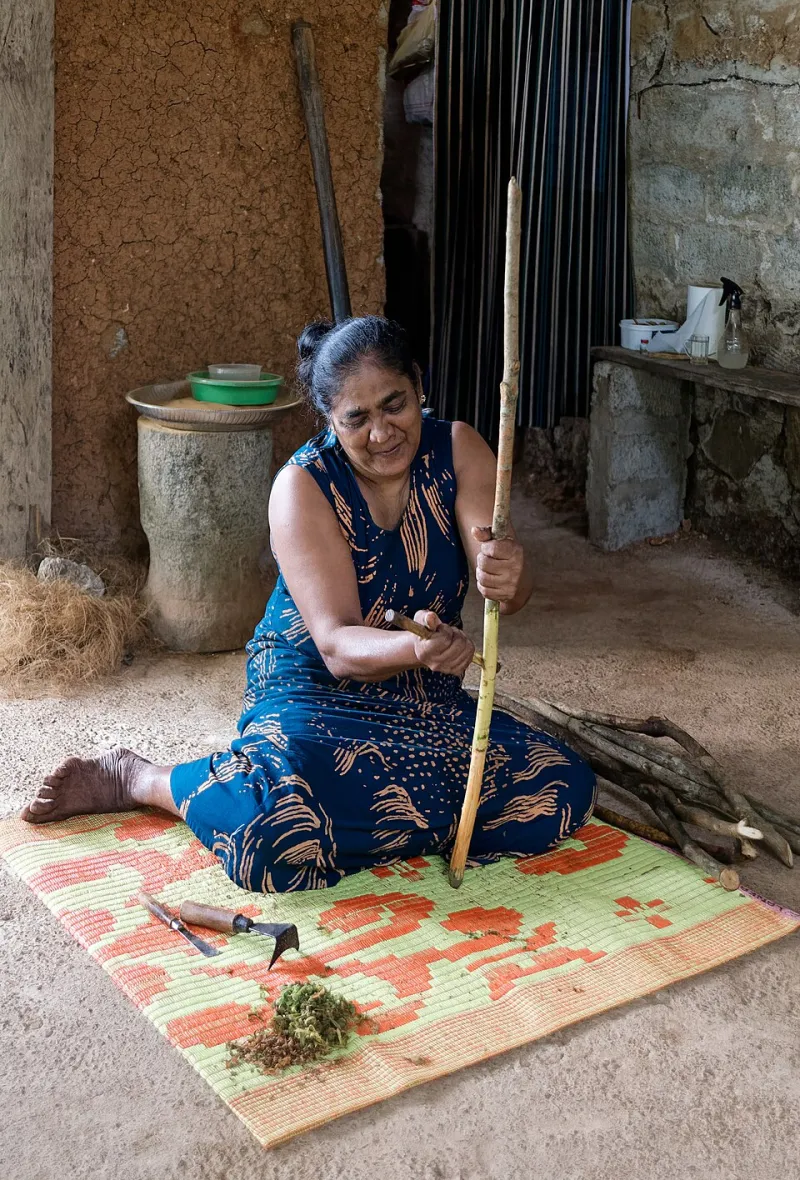
This is when spice quality starts to matter. When you're rushing, cinnamon is cinnamon. When you're present, you notice that the jar you bought three years ago has gone flat and dusty, and that fresh-ground Ceylon cinnamon from a reputable spice shop has a brightness and complexity that changes the whole experience.
This isn't about spending more money. It's about spending more attention. Buying one really good tin of spice and actually using it before it loses its potency is more satisfying — and more economical — than having fifteen half-used jars of things that have been on the shelf since the Obama administration.
The same principle applies to everything in the ritual kitchen: the mug you choose, the cutting board you use, the music or silence you let in. These are small decisions that collectively create an environment of care.
What You're Actually Feeding
Here's the part I want to be honest about: a slow morning kitchen practice won't fix a difficult life. It won't resolve a hard work situation or mend a strained relationship. On days when everything is genuinely hard, twenty minutes with a pour-over and some cinnamon is not going to be enough.
But it does something real. It creates a pocket of the day that belongs to you — not to productivity, not to other people's demands, not to the relentless forward motion of modern life. It gives you a place to return to yourself before the day asks you to be someone for everyone else.
And over time, that pocket accumulates. The ritual becomes a reference point. You know what it feels like to be calm and present and warm and unhurried, because you've practiced it, reliably, in the same space, with the same smells and sounds. That knowing is a resource you can draw on.
An Invitation, Not a Prescription
I'm not here to tell you that your morning has to look like mine. Maybe your version of a slow kitchen ritual is Saturday pancakes with your kids, made from scratch and entirely without agenda. Maybe it's Sunday soup prep with a podcast playing and nowhere to be. Maybe it's just committing to actually sitting down to eat breakfast instead of consuming it over a sink.
The form matters less than the intention. The point is to make your kitchen a place where something more than food gets made — where you practice the small, deliberate act of being present in your own life.
Add the cinnamon. Smell it bloom. Let it be enough.
That's the whole recipe.