Grandma's Recipe, Your Kitchen: How to Translate Heirloom Dishes for the Way You Actually Cook
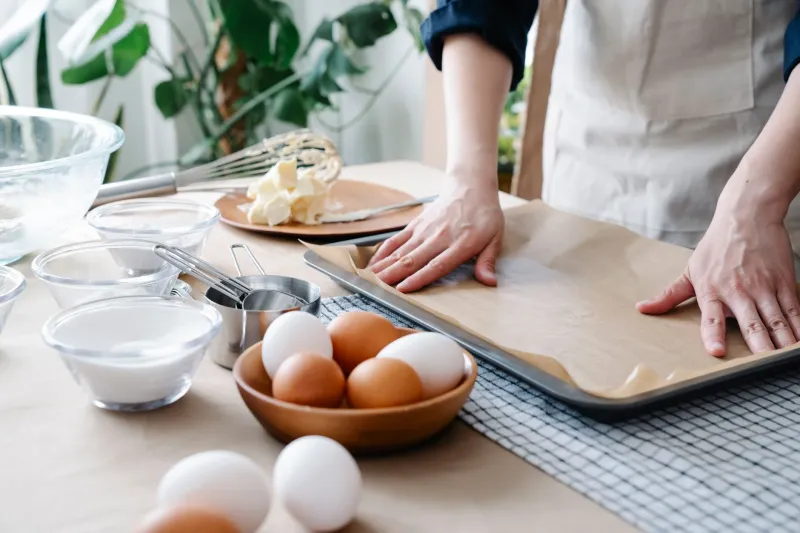
My grandmother's pie crust recipe calls for a "walnut-sized piece" of lard and instructs you to add water "until it feels right." That's it. That's the whole recipe.
If you grew up cooking at her elbow, those instructions made perfect sense. You'd felt the dough enough times to know exactly what right felt like. But if you're coming to this recipe cold—a piece of paper found in a shoebox after she passed—it reads less like a recipe and more like a riddle.
Family recipes are funny that way. They're full of shorthand, assumption, and the implicit knowledge of someone who made this dish so many times they stopped needing to write down the details. Adapting them for modern kitchens isn't about disrespecting the original—it's about making the dish live again.
Start With the Story, Not the Instructions
Before you change a single ingredient, spend some time understanding what the dish actually is. What was the occasion for it? Was it a Sunday dinner staple, a holiday centerpiece, a quick weekday meal that somehow tasted special? Who made it, and what did it mean to the people who ate it?
This context matters more than you might think. A dish that was made for Sunday supper after church carries different energy—and probably different richness and portion size—than something that was thrown together on a Tuesday night. Understanding the original purpose helps you decide what's essential to preserve and what's flexible.
If you can, talk to family members who remember the dish. Ask about the smell, the texture, the specific moment when it came out of the oven. Those sensory memories are your north star. When your adapted version hits those same notes—even if the ingredients aren't identical—you've succeeded.
Decode the Measurements
Old recipes are full of measurements that made complete sense in context and are now slightly baffling. Here's a quick translation guide for the most common ones:
- "A handful" — roughly ¼ cup for most dried ingredients, ½ cup for leafy herbs
- "A wine glass" — approximately ½ cup
- "A coffee cup" — usually about 6 oz, so just under ¾ cup
- "A pinch" — ⅛ teaspoon or less
- "A knob of butter" — about 1 tablespoon
- "Moderate oven" — 350°F; "hot oven" is typically 400–425°F; "slow oven" is around 300°F
For recipes that say things like "cook until done" or "bake until golden," use your best judgment the first time through and take notes. Write down actual times and temperatures so you can refine it on the next attempt.
Substituting Ingredients Without Losing the Dish
This is where most people get nervous, and it's also where the most interesting cooking happens. The key is understanding why an ingredient is in the recipe before you swap it out.
Lard and shortening appear in old pie crusts, biscuits, and tamales because they create a specific flakiness and tenderness that butter alone doesn't always replicate. If you're avoiding animal fats, leaf lard can sometimes be replaced with a combination of butter and a small amount of coconut oil. The texture will be slightly different—be honest with yourself about that—but the result can still be wonderful.
Whole milk or cream in older recipes is there for richness and fat content. If you're working with someone who's dairy-free, full-fat coconut milk is often the closest substitute in baked goods and creamy soups. Oat milk works well in lighter applications. The swap usually works best when the dairy was playing a supporting role rather than being the star.
Salt pork and fatback show up in Southern recipes, bean dishes, and slow-cooked greens as a source of both fat and smokiness. Smoked turkey necks or wings are a widely used substitute that preserves the depth of flavor without pork. A small amount of smoked paprika and olive oil can work for vegetarian versions, though the flavor profile will be noticeably different.
Bread flour versus all-purpose — many old bread recipes were developed when home cooks used whatever flour was available, which was often closer to what we'd call bread flour today. If a recipe produces a dense loaf with all-purpose flour, try bread flour for a chewier, more structured result.
Scaling for Modern Households
Recipes from previous generations were often written to feed large families—eight to twelve people, sometimes more. If you're cooking for two or four, you'll need to scale down, and not everything scales perfectly.
Baked goods are the trickiest. When halving a cake or cookie recipe, you can usually just halve everything, but watch your leavening agents. Baking powder and baking soda don't always scale linearly—too much can make something bitter or cause it to rise and then collapse. As a rule, when halving, use slightly less than half the leavening and adjust from there.
For savory dishes, scaling down is generally more forgiving. The one thing to watch is seasoning—salt in particular. When you reduce a recipe significantly, taste as you go rather than just mathematically halving the salt. Your palate is a better guide than arithmetic.
Honoring the Original While Making It Your Own
There's a version of recipe adaptation that goes too far—where the dish is adapted so aggressively that it no longer resembles what it was. That's fine for creative cooking, but it's not really preserving a heritage recipe. It's just cooking.
The sweet spot is what food historians sometimes call "faithful adaptation"—keeping the essential character of the dish intact while adjusting for practical constraints. The spices that made the dish distinctive stay. The cooking technique that gave it its texture stays. The story that surrounds it stays. What changes is whatever needs to change to make it cookable and enjoyable in your actual life.
Write your changes down. Date them. Note what worked and what you'd do differently. The recipe you hand to the next generation shouldn't be the original handwritten card alone—it should be that card plus your notes, your adaptations, your version of until it feels right.
Because that's how recipes stay alive. Not by being preserved exactly as they were, but by being cooked, loved, adjusted, and passed on—a little bit of the past and a little bit of you, together in every bite.